
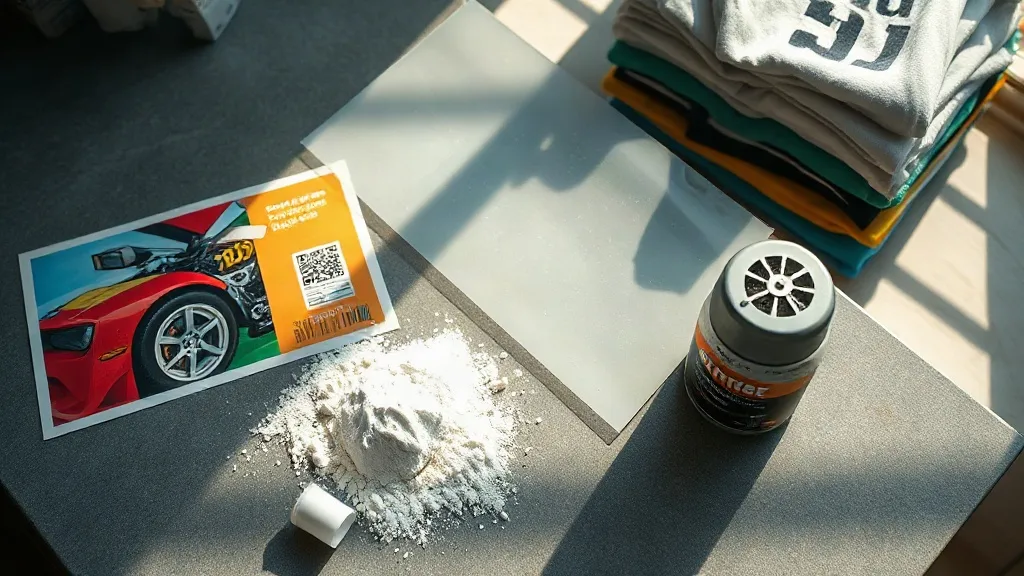
Most DTF problems get blamed on the printer. In reality, the consumables underneath it, the film, the powder, and the ink, decide whether a transfer presses clean or falls apart in the wash. I've watched shops chase press settings for weeks while the actual culprit sat in a half-open box of powder. This guide walks through how these three materials interact, what to look for when buying them, and how to test a new batch before it hits production.
Why consumables deserve more attention than the printer
The printer lays down ink, but it doesn't control how that ink sits on film, how powder bonds to it, or how the whole sandwich behaves under heat. Those are material properties. A $3,000 printer running mismatched consumables will lose to a $1,500 printer running a matched system every time. The dtf transfers process is short, but each step depends on the one before it. Film releases ink cleanly or it doesn't. Powder melts into the ink or it doesn't. Ink cures under the powder or it doesn't. When one link fails, the symptom shows up somewhere else, usually at the press or after the first wash.
That's why shops that treat film, powder, and ink as a single system spend less time troubleshooting. They aren't guessing which variable broke because they know the system was stable to begin with.
Film: the surface everything depends on
DTF film is a coated PET sheet. The coating does two jobs: it receives the ink without letting it soak in, and it releases the printed layer cleanly when you peel. Cheap film often skimps on the coating, and the symptoms show up in predictable ways.
What good film feels and looks like
- The coated side has a slight matte texture. If both sides feel identical, the coating may be uneven.
- It doesn't curl aggressively out of the box. Mild curl is normal, but film that rolls into a tube suggests moisture uptake or poor storage.
- Ink sits on the surface. If you see ink soaking into the sheet or feathering at the edges, the coating isn't holding.
Cold peel versus hot peel film
These aren't marketing labels, they describe how the release coating behaves at temperature. Hot peel film lets you remove the carrier while the transfer is still warm, which speeds up production. Cold peel film needs the transfer to cool before the carrier releases cleanly. Using hot peel film as if it were cold peel, or the reverse, causes the classic symptoms: ink stretching, partial transfer, or the carrier grabbing the design. Match your workflow to the film, not the other way around.
Storage matters more than most shops admit
Film absorbs humidity. A sheet that's been sitting open in a humid room will print with more dot gain and may cockle under the printhead. Keep film in its original bag, reseal it, and store it flat. If you're in a humid climate, a sealed bin with a desiccant pack is cheap insurance.
Powder: the layer that decides durability
Adhesive powder is what turns a printed image into a transfer. It melts into the wet ink, then bonds to fabric under heat. Get the powder wrong and no press setting will save you.
Particle size and mesh count
Finer powder gives smoother hand and better detail on small text and halftones. Coarser powder builds a thicker adhesive layer and can feel rough on the garment, but it sometimes bonds more aggressively on textured fabrics. Most shops settle on a mid-range powder for general work and keep a fine powder for detailed designs. The important thing is consistency: switching powder brands mid-job without adjusting powder application is a common source of uneven results.
Powder application: too much and too little
Too little powder and the transfer fails at the edges first, because the ink there is thinnest. Too much powder and you get a stiff, plastic hand, plus excess powder that contaminates the press platen and the shop floor. The right amount looks like a uniform frost across the wet ink, with no bare patches and no visible piles. Shake off excess before curing, and use a powder shaker with a fine mesh rather than pouring from a container.
Curing the powder
Powder needs enough heat to melt and flow into the ink, but not so much that it skins over before it bonds. Follow the powder manufacturer's cure temperature and time, and check that the melted layer looks slightly glossy and continuous. Matte or grainy patches mean undercuring. Bubbles or a wrinkled surface mean overheating. Both problems will show up later as adhesion failures, so fix them at the cure stage.
Ink: the chemistry under the powder
DTF ink is a pigmented system with a white layer that does the heavy lifting on dark garments. The white ink is thicker and settles faster than the color inks, which is why white management is its own discipline.
White ink circulation and settling
If your printer doesn't circulate white ink, you need to agitate it manually before each run. Settled white prints weak and translucent, and no amount of powder will fix a thin white layer. Many dtf printers include circulation or recirculation features for exactly this reason. If yours doesn't, build a habit: swirl the white cartridge or bag before printing, and run a small test print if the printer sat idle overnight.
Ink expiry and batch differences
Ink has a shelf life, and batches vary slightly in viscosity and pigment load. A new batch that prints noticeably different from the last one isn't necessarily defective, but it may need a small profile adjustment. Keep notes on batch numbers and print dates so you can trace a change in output back to its source.
How the three materials interact at the press
When film, powder, and ink are matched, pressing becomes predictable. When they aren't, symptoms appear that look like press problems but aren't. A transfer that peels at the corners after washing usually points to powder that didn't fully melt, or film that released unevenly. A transfer that looks grainy after pressing often means the powder was too coarse for the detail level. A transfer that cracks along stretch lines suggests the powder layer is too thick or the ink film is too brittle.
Before you touch temperature or pressure, check the consumables. Is the film within its storage life? Is the powder the same type you used on the last good run? Is the white ink properly mixed? These checks take two minutes and eliminate most of the variables that send operators down press-setting rabbit holes.
Testing a new batch before production
Every new roll of film, bag of powder, or batch of ink should get a test print before it goes into a customer job. A simple test pattern with fine text, a gradient, and a solid block on both a white and a dark shirt will reveal most issues. Press and wash one sample, then inspect for adhesion, hand feel, and color. Keep the sample labeled with the batch information. If a problem appears later, you'll have a reference point.
Shops that buy dtf transfers near me from a local supplier sometimes skip this step because the supplier is trusted. That's a mistake. Trust is fine, but batches change, and a five-minute test protects the relationship on both sides.
Buying decisions that save money later
The cheapest film and powder often cost more in wasted ink, reprints, and unhappy customers. A middle-tier consumable that behaves consistently beats a bargain that varies batch to batch. When comparing suppliers, ask about batch consistency, storage recommendations, and whether they publish technical data sheets. A supplier who can't answer basic questions about mesh count or cure temperature is a risk.
Also consider ordering in quantities that match your turnover. Film and powder degrade with age and humidity, so a year's supply at a discount can turn into a loss if half of it sits open in a humid room. Match your order size to your actual monthly usage.
Frequently asked questions
Can I mix film brands with powder from a different supplier?
You can, but test first. Film coatings and powder chemistries are designed to work within a system, and mixing brands can change how the powder melts into the ink. Run a small test print and a wash test before committing a production run.
How do I know if my powder is too coarse for a design?
Print a test with fine text and small halftone dots. If the detail fills in or the edges look rough after pressing, the powder is likely too coarse for that level of detail. Switch to a finer mesh powder for detailed work.
Why does my white ink look thin even after shaking?
Shaking helps, but if the white hasn't circulated in a while, settled pigment can be stubborn. Some printers have a circulation cycle you can run before printing. If not, let the cartridge sit at room temperature and agitate thoroughly, then print a small test to confirm opacity.
How should I store film and powder in a humid climate?
Keep film sealed in its original bag inside a bin with a desiccant pack. Store powder in an airtight container away from moisture and heat. Bring materials to room temperature before opening to prevent condensation on the surface.
Is it worth buying premium film if my printer is entry-level?
Often yes. Film quality affects ink release and transfer cleanliness, which entry-level printers are more sensitive to. Good film can make a modest printer produce consistent results, while poor film can make a good printer look unreliable.