
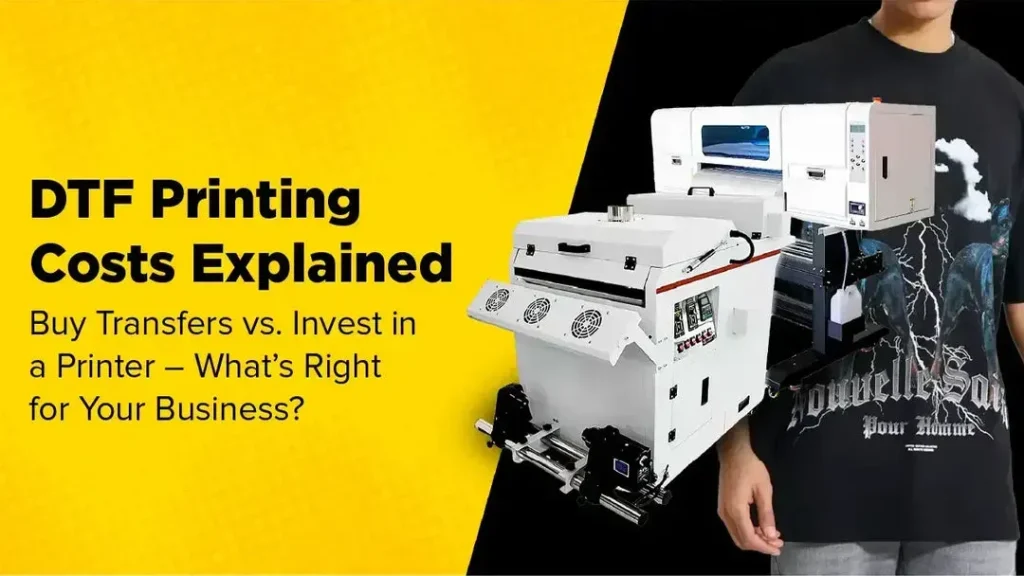
UV DTF transfer cost is a critical figure for planning budgets, pricing orders, and selecting equipment that aligns with your shop’s goals across apparel, promotional products, and custom merchandise, and this viewpoint helps you compare options from budget-friendly entry systems to high-throughput industrial setups with confidence. Understanding this cost means looking beyond the sticker price to three main buckets: upfront machine investment, ongoing consumables, and routine maintenance, while also forecasting monthly transfer volumes and accounting for seasonal demand, batch sizes, and potential downtime. DTF transfer equipment costs set the baseline, with choices spanning entry-level printers to industrial systems that influence speed, ink efficiency, maintenance needs, power consumption, and long-term depreciation on tax schedules or financing terms. DTF transfer materials price includes film, adhesive, and UV inks, and UV DTF film and adhesive costs can swing per-item economics when you weigh durability against budget, quality expectations, shelf life, and the supplier’s reliability. UV DTF printer maintenance and routine service help keep downtime low and quality consistent, stabilizing the overall cost per transfer, reducing waste, and protecting margins through predictable performance, spare-part availability, and timely firmware updates.
Beyond the obvious label of printing costs, the total expense of UV DTF transfers blends equipment investment, consumables, and ongoing service into a per-piece figure that customers rarely see upfront. View this topic through alternative terms like per-transfer expenditure, setup costs, and lifetime ownership expenses to understand how decisions ripple through margins. When you evaluate it through an LSI lens, maintenance cycles, ink and media pricing, and energy use become interconnected factors rather than isolated line items. As you plan for growth, align your purchasing with scalable workflows, service options, and supplier terms to optimize this broader budget while maintaining print quality. This holistic approach helps shops compare options across brands and budget levels without sacrificing results.
Understanding the UV DTF transfer cost: key cost buckets and profitability
Understanding the UV DTF transfer cost means recognizing three primary cost buckets: equipment, materials, and maintenance. The term DTF transfer equipment costs captures the upfront investment in an UV-capable printer, curing or laminating setup, and the supporting software or workflow system. By aligning these upfront costs with your expected monthly volume, you can estimate the cost per transfer UV DTF and set price points that protect margins.
Beyond the sticker price, planning for ongoing expenses is essential. The DTF transfer materials price, including film, adhesives, and UV-curable inks, drives the long-term per-transfer expense. When you project monthly output and calibration needs, you can see how UV DTF film and adhesive costs, waste from misprints, and testing phases affect profitability and decision-making.
Equipment costs for UV DTF: upfront investment, depreciation, and long-term savings
Equipment costs for UV DTF are not a one-time event. Entry-level setups offer a lower initial price but may incur higher long-term costs due to slower throughput and reduced reliability. Mid-range systems tend to balance upfront spend with better speed, color stability, and curing options, which can lower per-transfer waste and gradually reduce DTF transfer equipment costs over time.
Depreciation and amortization turn the equipment price into a predictable monthly carry cost. Planning a typical 3–5 year useful life helps you allocate a steady monthly charge that factors into the cost per transfer UV DTF. When you match equipment capabilities to your anticipated volume, you improve ROI and ensure the investment scales with business growth.
Materials costs in UV DTF transfers: film, adhesive, and ink pricing strategies
Materials costs are the most visible portion of the transfer cost and include UV transfer film, adhesive powder, and UV-curable inks. Tracking DTF transfer materials price across suppliers helps you forecast budgets and compare options, while UV DTF film and adhesive costs shape the durability, look, and adhesion of each transfer.
Quality choices influence yield and waste. Higher-quality transfer film can improve color vibrancy and durability but commands a higher unit price. Efficient adhesive usage and precise calibration reduce waste, lowering the effective cost per transfer UV DTF over time as you optimize material usage and run length.
Maintenance and operating costs: keeping your UV DTF system in top condition
Maintenance and operating costs ensure consistent results and minimize downtime. Regular UV DTF printer maintenance—head cleaning, nozzle checks, and software updates—prevents clogs and misprints that would waste film and ink. A proactive maintenance plan reduces unexpected downtime, helping you keep a stable cost per transfer and protect margins.
In addition to consumables, plan for wear items, replacements, and energy use. O-rings, rollers, seals, fans, and UV lamps require periodic spending, and while electricity costs per unit are relatively small, they accumulate with high-volume production. Proper maintenance helps keep throughput steady and the cost per transfer UV DTF predictable.
Strategies to reduce UV DTF transfer cost without sacrificing quality
Strategic cost reduction starts with workflow optimization and precise color management. Calibrated color profiles and optimized printer parameters minimize misprints and the need for test runs, reducing the material impact of the DTF transfer materials price. Efficient setup and reduced waste directly lower the cost per transfer UV DTF while maintaining print quality.
Bulk purchasing and supplier negotiations can yield meaningful discounts on film, adhesive, and inks. A proactive maintenance schedule reduces downtime, and multi-purpose equipment can spread fixed costs across more jobs, further driving down unit costs and improving margins without compromising quality.
Buying guide: selecting UV DTF equipment and materials for sustainable ROI
When selecting UV DTF equipment and materials, consider production capacity, reliability, and service networks. A thorough review of DTF transfer equipment costs should include warranties, spare parts availability, and a clear total cost of ownership. Matching printer speed and curing capability to your monthly volume supports reliable throughput and budget control.
This buying guide emphasizes balancing upfront price with long-term savings. Compare DTF transfer materials price across suppliers, assess energy and maintenance needs, and plan for depreciation over a 3–5 year horizon. A sustainable ROI comes from aligning hardware, materials, and maintenance with your shop’s growth trajectory.
Frequently Asked Questions
What is the UV DTF transfer cost and what factors influence it?
The UV DTF transfer cost is the total expense to produce a transfer, typically broken into three buckets: equipment costs, materials costs, and maintenance/operating costs. Understanding this cost helps estimate cost per transfer UV DTF and set pricing. Key drivers include upfront equipment investment, transfer film and adhesive costs, ink/UV resin consumption, and ongoing maintenance. To estimate, forecast monthly volume and apply depreciation, per-transfer material usage, and routine maintenance spend.
How do DTF transfer equipment costs affect the UV DTF transfer cost over time?
Equipment costs are the largest upfront portion and influence the cost per transfer UV DTF through depreciation or amortization. Spreading the upfront price over the expected life (3–5 years) yields a monthly charge that lowers per-transfer cost at higher volumes, while cheap entry-level gear may raise long-run costs due to slower speed and higher waste.
How does UV DTF printer maintenance impact the UV DTF transfer cost?
Regular UV DTF printer maintenance reduces downtime, waste, and quality issues, stabilizing the cost per transfer UV DTF. Preventive cleaning, head maintenance, and timely part replacements keep transfers consistent and minimize expensive reprints, which lowers material and labor costs over time.
What is the typical DTF transfer materials price per transfer and how can I estimate it?
DTF transfer materials price per transfer includes film, adhesive powder, and UV inks. To estimate, measure average film and adhesive consumption per transfer and multiply by your monthly volume, adding ink costs and waste. Bulk purchasing and supplier quotes can further reduce the cost per transfer UV DTF and UV DTF film and adhesive costs.
What strategies help reduce the UV DTF transfer cost without sacrificing quality?
Optimize workflow and printer settings to minimize waste, negotiate bulk pricing for film and adhesives, schedule proactive maintenance to avoid downtime, and consider multi‑purpose equipment to spread costs across jobs. Also, plan layouts to reduce material waste and optimize energy use to lower the cost per transfer UV DTF.
How should I evaluate equipment and materials to minimize the UV DTF transfer cost while maintaining quality?
Compare total cost of ownership, including depreciation, maintenance, consumables, energy, and downtime. Look at production capacity, reliability, warranties, and service networks, then run a small pilot to compare cost per transfer UV DTF across options. This approach helps you balance equipment costs with material costs and get the best value.
| Aspect | Description | Practical Takeaways |
|---|---|---|
| Overall Cost Structure | UV DTF transfer cost breaks into three buckets: equipment upfront, ongoing materials and consumables, and maintenance/operating expenses. Monthly transfer volume affects the cost per transfer. | Budget by total cost of ownership; map monthly transfers to estimate per-item cost. |
| Equipment Costs | Upfront investments include UV DTF printer, imaging head, curing/laminating setup, and software. Levels range from entry-level to professional/industrial. | Use depreciation (3–5 years) to calculate monthly amortization; consider long-term trade-offs like speed and ink efficiency. |
| Materials Costs | Transfer film, adhesive powder, UV inks, coatings; influenced by film quality, width, adhesive usage, ink type, and waste/testing. | Estimate cost per transfer by average consumption; compare supplier quotes to optimize per-transfer spend. |
| Maintenance & Operating Costs | Regular cleaning, wear parts, software updates, energy usage; maintenance reduces downtime and stabilizes throughput. | Plan for periodic replacements and schedule maintenance to minimize surprises; energy costs add up with high volumes. |
| Estimating Cost per Transfer (Example) | Example: 2,000 transfers/mo; equipment amortization ≈ $333/mo; materials ≈ $1,000/mo; maintenance $50–$100; energy $25–$50; labor $150–$250. | Total ≈ $558–$773/mo; cost per transfer ≈ $0.28–$0.39. |
| Cost Reduction Strategies | Optimize workflow and printer settings, bulk purchasing, proactive maintenance, multi‑purpose equipment, reduce energy use, optimize material utilization. | Focus on waste reduction and uptime to improve margins without sacrificing quality. |
| Buying Guide | Look for production capacity/speed, reliability/parts availability, print quality, workflow compatibility, warranty/service, and total cost of ownership. | Choose equipment that matches volume and supports long-term cost containment. |
Summary
HTML rendering is disabled in this environment.