
For those striving to build a scalable apparel brand, the transition from basic garment customization to professional-grade textile manufacturing is a test of technical discipline. In the current market, dtf technology has effectively democratized high-end printing, but this accessibility is a double-edged sword. While it’s easier than ever to get started, the marketplace is becoming saturated with low-effort, low-durability output. To truly stand out, you must treat your production workflow not as a craft, but as an engineered system of quality control.
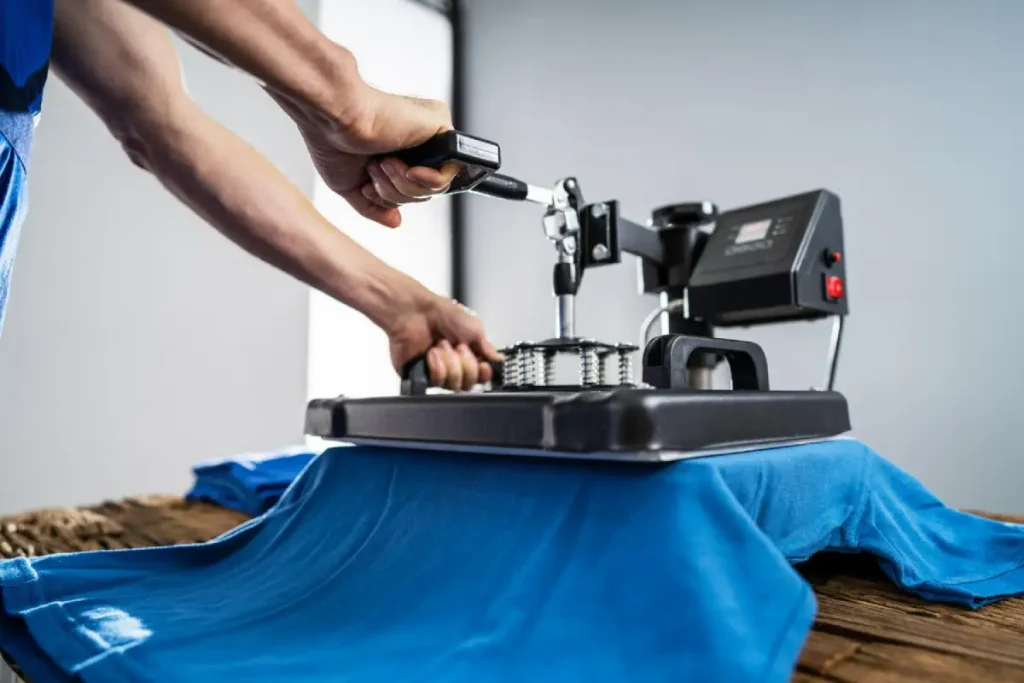
The “soft-hand” feel that distinguishes a premium retail garment from a generic promotional shirt is entirely a function of your application parameters. When you use high-quality dtf transfers, you are essentially applying a specialized technical film. If that film sits on the surface like a sticker, your process needs adjustment. Harwin’s perspective is that your heat press is the most critical piece of laboratory equipment in your shop, and the data you gather from it is what determines your brand’s long-term market position.
The Hidden Mechanics of Adhesive Penetration
Many production failures are misdiagnosed as “bad ink” or “defective film,” when the root cause is almost always inadequate adhesive penetration. During the heat press process, the adhesive must transition from a solid state to a liquid flow that embeds itself within the micro-structure of the fabric. If your PSI is too low or your dwell time is inconsistent, you get a weak, surface-level bond.
To master this, move toward a “Pressure-First” mindset. We recommend investing in a professional-grade heat press that displays digital pressure readouts. By standardizing your pressure to a specific PSI for every garment type—such as 60 PSI for cotton knits vs. 45 PSI for delicate polyester—you guarantee the same level of fiber penetration in every single unit. This level of technical oversight is what ensures your brand doesn’t suffer from the “peeling” reputation that plagues smaller competitors.
Logistical Agility: Why “Near Me” is a Strategic Asset
Operational efficiency is the cornerstone of sustainable growth. The convenience of searching for dtf transfers near me is often framed as a way to save on shipping, but it is actually a strategy for “Operational Velocity.” By building a partnership with a highly technical regional printing house, you remove the latency from your supply chain. You gain the ability to prototype new designs and fulfill high-priority customer requests in hours, rather than waiting on the logistical delays of national shipping providers.
This localized model also allows for an iterative R&D process. You can work with your regional partner to “tune” your transfers—adjusting ink density to suit your specific fabric blend or requesting a specific matte-finish additive that is currently trending in high-end streetwear. By integrating your print supplier into your R&D process, you gain an unfair advantage in market responsiveness that large, remote manufacturers simply cannot match. Harwin encourages this partnership-driven model as the most effective path to a lean, high-profit apparel business.
Governance via Technical Documentation
Scalability requires the removal of guesswork. If your brand’s quality is dependent on the “intuition” of a single operator, you are not a business; you are a workshop. To transition into an apparel manufacturer, you must document your “Production Ledger.” This digital ledger should act as the master reference for your team, containing the exact thermal profile, dwell timing, and cooling duration for every SKU in your catalog.
When you standardize these metrics, you eliminate the variability of human error. Furthermore, by performing systematic wash-tests on samples from each production run, you build a library of empirical data that proves your quality. When a retail customer asks why they should pay a premium for your brand, you don’t offer an opinion—you offer the proof of your wash-test durability. That shift from “we think we’re good” to “we know we’re durable” is the exact moment a small brand starts scaling into a market leader.
Frequently Asked Questions
What is the most common cause of “edge-lifting” on a print?
Edge-lifting is almost always caused by an uneven platen or inconsistent pressure. If your press has “cold spots” or if the edges of your platen have less pressure than the center, the adhesive won’t bond at the perimeter of the graphic. Always ensure your design is centered and your press is leveled.
Is DTF compatible with luxury, high-thread-count fabrics?
Yes, but you must be surgical with your heat. High-thread-count fabrics often have “tight” weaves that resist adhesive penetration. Use a lower temperature for a slightly longer duration to allow the adhesive to flow into the tight fiber gaps without scorching the high-quality fabric surface.
How does the “Cool-Peel” method improve longevity?
The “Cool-Peel” method is a phase-change requirement. When the film is hot, the adhesive is in a molten state. As it cools, it transitions into a solid state while entangled with the fabric fibers. Rushing the peel forces the adhesive to separate while still unstable, creating microscopic weak points in the bond.
What is the benefit of a “Matte” finish transfer?
Matte finishes are currently a high-demand aesthetic in streetwear. Beyond the look, matte transfers often contain specific chemical additives that improve the flexibility of the print, making them less prone to cracking over time compared to high-gloss alternatives.
Building a successful, high-quality apparel brand is a journey of continuous technical refinement. By mastering the potential of dtf, you position your brand to compete at the highest level of the custom merchandise market. Harwin is committed to providing the industry insights you need to turn your production floor into a professional, profitable enterprise. Start optimizing your workflow today—your commitment to quality is the most valuable investment you can make for your brand’s future.