
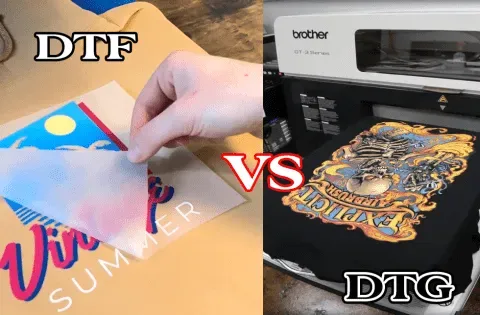
DTF vs DTG shapes how brands decorate garments, offering different looks, textures, and production workflows that influence cost, speed, and consistency across product lines. In this DTF vs DTG comparison, retailers weigh color richness, fabric compatibility, edge sharpness, and the long-term durability of transfers to decide where to invest in equipment, supplies, and training. Understanding the DTF printing pros and cons helps you choose between a film-transfer pipeline and a direct-to-fabric approach while weighing upfront costs, maintenance needs, waste considerations, and scalability. DTG vs DTF differences become evident when testing on light cotton versus dark blends, where hand feel, opacity, and color saturation can determine which method aligns with your brand identity. Ultimately, this guide points toward the best transfer method for apparel by running pilots, measuring outcomes, and aligning the choice with your fabric mix, finish preferences, and budget.
Looking at this topic through alternative terms, think of film-based transfers versus direct garment printing. From an LSI perspective, related concepts like fabric versatility, wash durability, color fidelity on light and dark textiles, and production efficiency help connect the core ideas to broader search queries. This framing uses synonyms and related terms such as adhesive film, heat press application, and garment compatibility to aid reader comprehension and improve discoverability.
DTF vs DTG comparison: Choosing the right path for your brand
When you start weighing DTF against DTG, the decision often comes down to how well each method aligns with your brand strategy, product mix, and operational realities. The DTF vs DTG comparison reveals that both techniques can deliver vibrant, durable images, but they achieve this in different ways: DTF uses a film transfer with adhesive, while DTG prints directly onto fabric. Understanding these core differences helps brands map out which path scales most effectively for their catalog, color stories, and dark- or light-color garments.
For brands expanding an on-demand catalog or testing new markets, the choice influences not only print quality but logistics, maintenance, and cost. A thoughtful DTF vs DTG comparison considers fabric versatility, turnaround times, and the potential for cross-fabric production. It also spotlights how each method handles color fidelity, opacity on darker fabrics, and the perceived premium feel that customers expect from a given product line.
DTG vs DTF differences: fabric compatibility, color quality, and hand feel
DTG vs DTF differences become most apparent when working across fabrics. DTG excels on 100% cotton and light fabrics, delivering soft-hand prints that feel almost uninhibited against the textile. This is a strong advantage for premium cotton tees and light hoodies where color detail and subtle gradients can shine. In contrast, DTF stands out for its ability to perform across a broader range of fabrics, including blends and poly-rich materials, expanding your product catalog without retooling production lines.
Color richness and hand feel also diverge between methods. DTG typically yields cleaner gradients and a softer touch on suitable fabrics, whereas DTF offers bold color saturation and strong durability, even on darker garments, due to the film layer and adhesive. Brands balancing intricate artwork with a diverse fabric mix often find the DTG vs DTF differences decisive: DTG for premium cotton-focused runs, DTF for versatility and durability across a broader fabric spectrum.
DTF printing pros and cons: scalability, cost, and workflow
DTF printing pros and cons come into sharp focus when evaluating scalability and total cost of ownership. On the pro side, DTF can be more affordable to start, especially for shops already operating a print workflow or those with access to a heat press and a film production setup. It also supports a wider fabric range, which can simplify inventory and product development for brands looking to diversify beyond 100% cotton.
On the con side, the DTF workflow introduces additional steps—film printing, powder adhesion, post-curing—that can complicate quality control if not standardized. Consumables like films, powders, and adhesives influence cost per unit and consistency, particularly at lower volumes. Yet, for larger runs and multi-fabric lines, DTF can prove efficient and scalable with proper process standardization.
Durability of transfers: wash resistance, longevity, and performance across fabrics
Durability of transfers remains a central consideration for customer satisfaction and return rates. DTG durability hinges on careful pretreatment, curing, and the specific ink system used; when performed correctly, it can deliver long-lasting results with strong wash fastness on appropriate fabrics. The perceived durability is often linked to the soft hand feel and how well the ink integrates with the fabric over time.
DTF transfers typically demonstrate robust performance due to the film-based layer and adhesive, which can resist cracking and peeling with proper curing. However, improper powder formulation or under-curing can undermine longevity, especially on poly-rich blends or heavy wash cycles. Overall, both methods can achieve durable results when production standards, testing, and post-processing are tightly controlled.
Best transfer method for apparel: aligning method characteristics with product goals
Best transfer method for apparel decisions hinge on aligning method characteristics with your product goals. If your priority is versatility across fabrics, strong color impact on dark garments, and scalable production, DTF often offers a practical path for a mixed catalog. Its cross-fabric compatibility can reduce supplier complexity and streamline restocks across diverse garment types.
If your core line emphasizes high-detail artwork, soft hand feel, and premium appearance on light fabrics, DTG may be the better fit. The DTG approach shines on 100% cotton items where gradients and photo-like imagery can be reproduced with excellent clarity. The right choice depends on the balance between desired hand feel, color fidelity, fabric diversity, and logistical considerations in your production line.
Pilot testing, cost of ownership, and decision frameworks for DTF vs DTG
To move from hypothesis to a confident decision, run a practical pilot program. Print a representative batch (for example 20-50 items) across fabrics and colors that reflect your planned catalog. This real-world testing helps you observe color vibrancy, texture, opacity on darks, and wash performance after multiple cycles, providing tangible data to guide the final choice.
A robust decision framework also weighs total cost of ownership (TCO). Include printer depreciation, consumables, pretreatment, films, powders, labor, maintenance, and potential downtime. Compare cost per unit for typical run sizes and factor in future scalability as demand grows. Fragmented testing—covering both short-run cotton tees and mixed-fabric items—ensures the selected method aligns with forecasted product mix and operational capabilities.
Frequently Asked Questions
DTF vs DTG comparison: which is better for apparel decoration?
DTF vs DTG comparison shows two strong options. DTF offers versatility across a wide range of fabrics, including blends and dark garments, and typically scales well for larger catalogs. DTG shines on high-detail artwork and a soft hand on light-colored, 100% cotton fabrics. Your brand should pick based on fabric mix and desired feel.
What are the DTF printing pros and cons compared to DTG?
DTF printing pros include broad fabric compatibility, strong color saturation on many fabrics, and easier multi-fabric logistics. Cons include a potentially firmer hand due to the film and adhesive layer and a more complex workflow for some shops. DTG pros are exceptional detail and a soft hand on cotton, but it requires pretreatment and white ink management, which can raise setup costs. Consider your catalog and production constraints when choosing.
DTG vs DTF differences: how do color, fabric compatibility, and feel compare?
DTG differences center on color detail and hand feel on light fabrics: crisp gradients on 100% cotton with a soft touch. DTF differences highlight strong color saturation and durability across fabrics, including blends and dark garments. Overall, DTG favors premium cotton prints; DTF offers broader fabric versatility.
What is the best transfer method for apparel: DTF or DTG?
There is no universal winner; the best transfer method depends on brand priorities. If you need versatility across fabrics and dark colors with scalable production, DTF is often the practical choice. If your focus is ultra-detail on light fabrics and a premium hand, DTG may be the better fit. Consider a pilot test to confirm.
How durable are transfers from DTF vs DTG and how can you optimize washability?
Both methods can deliver strong wash durability when applied correctly. DTF tends to hold up well across blends and poly fabrics thanks to the film adhesive layer, while DTG durability depends on pretreatment, curing, and ink type. To optimize longevity, follow proper curing, use quality materials, and implement a robust QA process including wash-fastness testing.
DTF vs DTG for a multi-fabric catalog and on-demand production: when should you choose which method?
DTF vs DTG should be evaluated through a structured test: analyze your product mix, run a small pilot, and compare total cost of ownership. For catalogs spanning multiple fabrics and frequent restocks, DTF often offers simpler scalability. For cotton-dominant lines with high-detail artwork, DTG can deliver the best end-user experience. A hybrid approach can also provide flexibility.
| Aspect | DTF | DTG |
|---|---|---|
| Overview | Film-based transfer using a special film plus adhesive powder; applied with a heat press; sits on fabric via the film. Broad fabric compatibility and strong color performance across many textiles, including darker garments. | Direct-to-garment printing that applies water-based inks directly onto fabric; works best on light fabrics and high-detail artwork, especially on 100% cotton. |
| Fabric compatibility | Broad fabric range, including cotton blends and dark fabrics, thanks to the film foundation and adhesive layer. | Ideal for 100% cotton and light fabrics; darks require pretreatment and white underbase for color depth. |
| Cost & setup | Typically lower upfront costs; film/adhesive workflow; maintenance can be simpler for some shops. | Higher upfront investment for DTG printers; ongoing consumables (pretreatment, white ink); more maintenance andおperations complexity. |
| Color, detail | Vivid colors with strong saturation; well-suited for bold graphics across multiple fabrics. | High-detail artwork with smooth gradients on suitable fabrics; best on high-resolution designs for cotton. |
| Durability & feel | Typically a slightly firmer hand due to the film/adhesive; durable with proper curing. | Soft hand on cotton when well-cured; durability depends on pretreatment and ink quality; crack risk minimized with proper processes. |
| Production speed & scalability | Good for larger runs and cross-fabric catalogs; film workflow can be parallelized across steps. | Fast for small cotton runs; pretreatment adds setup time; scalable but depends on ink and curing steps. |
| Brand fit & use-case | Excellent for diverse fabrics and dark colors; reduces need for fabric-specific workflows. | Best for cotton-focused lines with ultra-detail designs; strong option for on-demand cotton goods. |
| Practical testing & decision strategies | Define product mix; run pilot batches across fabrics; compare color, texture, and wash performance; assess TCO. | Test on dark garments; pilot with representative colors; measure customer perception; consider hybrid approaches for mixed catalogs. |
| Sustainability | Footprint tied to films, powders, and energy; optimize with efficient, on-demand production and responsible material choices. | Footprint tied to inks and pretreatment; water-based options and waste reduction can improve eco-friendliness. |
Summary
DTF vs DTG is a decision guided by your brand priorities, not a universal winner. For brands seeking versatility across fabrics and strong performance on dark garments, DTF offers a practical, scalable path. For brands prioritizing ultra-detail artwork, a soft hand on light fabrics, and premium print quality on cotton, DTG can deliver exceptional results. The best approach is to define your product mix, run pilots, and evaluate total cost of ownership to choose the method that aligns with your goals, fabrics, and operations. A hybrid or mixed workflow may also suit brands with diverse catalogs, helping you achieve durable, vibrant prints that satisfy customers and support growth.