
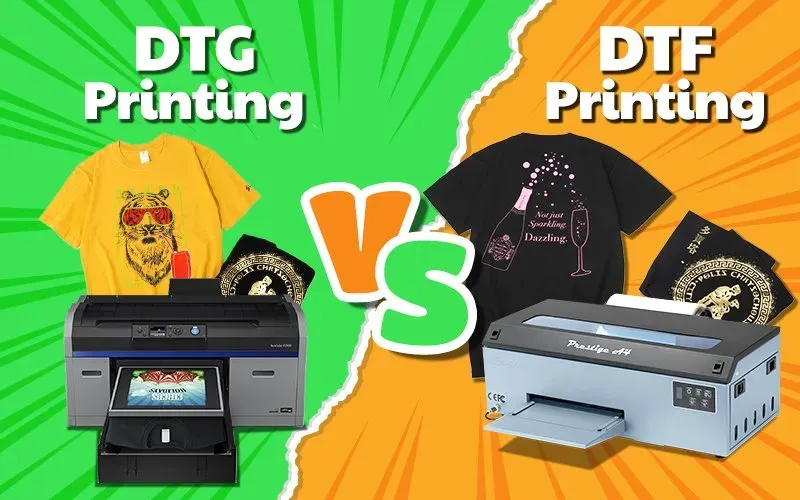
DTF vs DTG printing is a hot topic for apparel brands seeking the best printing method. This intro compares how each workflow impacts color fidelity, durability, fabric compatibility, and overall production costs. If you’re evaluating options, you’ll see how DTG cost comparison and DTF printing durability influence brand decisions. DTF printing durability is often cited for robust adhesion and multi-fabric versatility, while DTG cost considerations grow with complexity and volume. By outlining where each method shines and where it can fall short, this guide helps you choose the best printing method for apparel brand growth.
Viewed through a different lens, the debate shifts from names to process families: film-based transfers versus direct-on-fabric inks. LSI-inspired terminology links ideas like substrate versatility, color fidelity, wash durability, and production efficiency across fabrics. In this frame, ‘Direct-to-Film’ becomes the film-transfer method and ‘Direct-to-Garment’ becomes the ink-on-textile approach. This helps readers understand how each family performs on cotton, blends, and synthetics, and what that means for soft hand feel and color vibrancy. Ultimately, the goal is to guide brands toward the option that best matches their product mix, volumes, and brand story.
1) DTF vs DTG printing: A Practical Comparison for Diverse Fabrics and Costs
Choosing between DTF printing and DTG printing hinges on fabric versatility and production economics. DTF excels across a broad range of fabrics—from cotton to blends and synthetics—providing consistent results even on dark fabrics thanks to a white underlayer and a robust film transfer. DTG, by contrast, shines on 100% cotton with high color fidelity and a soft hand feel, but its performance can vary with fabric type and color, making the decision highly dependent on your product mix.
For brands evaluating cost and speed, DTF is often more economical for mid-volume runs due to simpler setup, no screens, and faster design changes. DTG can deliver superb detail and gradients on cotton, but higher upfront equipment costs and maintenance can factor into the total cost of ownership. When weighing factors like color blocks, durability, and the need for cross-material consistency, align your choice with your catalog plan and long-term brand strategy.
2) DTF printing durability: Built to last across fabrics
Durability is a core strength of DTF, with strong adhesion that remains reliable through repeated wash cycles across diverse fabrics. The film-based transfer tends to hold edges sharp and colors vibrant, making it a dependable option for multi-fabric lines and high-volume SKUs where consistency matters.
This durability edge is often cited in real-world use, where DTF finishes resist cracking and fading on a variety of blends and synthetics. Brands prioritizing long-term performance across a broad product range may find DTF printing durability to be a decisive factor, especially when paired with efficient production workflows.
3) DTG printing advantages for high-detail color and soft hand feel
DTG printing advantages include superb color reproduction, subtle gradients, and the ability to render photo-realistic imagery with remarkable fidelity on suitable fabrics. The inks bond with fibers to create a soft hand feel, which is especially valued for premium cotton tees and fashion-forward designs that rely on fine detail.
However, the technique can be challenged by fabric darkening without a white underbase and may require careful curing and maintenance to maintain vibrancy over time. When color depth and delicate shading are central to your designs, DTG’s precision is a strong differentiator—even as you manage considerations of cost and production complexity.
4) DTG cost comparison: costs, maintenance, and per-unit economics
Understanding DTG cost comparison goes beyond the sticker price of a printer. Upfront investments, routine maintenance, ink usage, curing energy, and potential downtime all shape the true per-unit cost. For high-detail, cotton-heavy runs with frequent design changes, DTG can offer compelling value, but only if your volume and turnaround align with maintenance schedules.
In mixed-fabric lines or smaller batches, DTG’s higher setup and maintenance demands may tip the balance toward DTF, which provides more predictable costs per unit and less sensitivity to fabric variation. When projecting profitability, model scenarios that include pilot tests, color management needs, and long-term repeat orders to choose the most economical method for your brand.
5) Best printing method for apparel brand: choosing DTF vs DTG by product mix
Selecting the best printing method for your apparel brand starts with your product mix and target markets. If you offer a lot of blends and synthetic fabrics or require reliable performance across multiple garment types, DTF’s cross-material reliability positions it as a strong foundational method. This approach can simplify catalog expansions and ensure consistent results across new SKUs.
If your strategy centers on cotton-heavy collections, high-detail imagery, and premium hand feel, DTG becomes an attractive option. The key is to balance long-term costs with design ambitions—often brands find value in a blended approach, using DTG for cotton-heavy lines and DTF for multi-fabric collections to maximize reach and profitability.
6) Practical decision framework: step-by-step guidance for DTF vs DTG in brand planning
Begin with a clear product mix assessment. Catalog all fabrics used and identify which products must cross-material compatibility versus those that rely on cotton-first designs. This helps determine whether DTF’s flexibility or DTG’s fidelity best serves your catalog and market strategy.
Next, estimate volumes, lead times, and color/finish preferences. For mixed batches, plan around DTF workflow efficiencies; for image-heavy cotton lines, factor in DTG maintenance and curing. Finally, run a pilot program to compare color accuracy, hand feel, wash performance, and overall cost—then scale the approach that best aligns with your brand’s goals and customer expectations.
Frequently Asked Questions
DTF printing vs DTG printing: how do they differ and which should an apparel brand choose?
DTF printing vs DTG printing operate with different workflows and fabric compatibility. DTF uses a film and bonding powder to transfer a design, delivering bold colors and strong durability across a wide range of fabrics, and it tends to have simpler setup for mixed-material runs. DTG prints directly onto fabric for high-detail color and a soft hand feel, excelling on 100% cotton but often requiring more steps on dark fabrics and higher upfront equipment costs. For an apparel brand, weigh your product mix, volume, lead times, and cost per unit to decide the best path.
DTG printing advantages: what are the DTG printing advantages over DTF?
DTG printing advantages include high color fidelity and fine detail on suitable fabrics, especially on white or light cotton, with a very soft hand feel. It shines for multi color artwork and photographic images, reduces edge harshness, and works well with direct digital workflows. However, DTG can be more sensitive to fabric type, may require white underbases on dark fabrics, and often comes with higher upfront costs than entry‑level DTF setups.
DTF printing durability: how durable is DTF printing compared to DTG printing?
DTF printing durability is typically strong across a wide range of fabrics and wash cycles, with robust adhesion from the film transfer and powder. Edge definition remains sharp and colors stay saturated on many substrates, making it a reliable choice for mixed fabric lines. DTG durability can also be excellent when properly cured, but performance on non‑cotton fabrics or frequent heavy washing may require more careful processing.
DTG cost comparison: how does the DTG cost comparison with DTF look for mid-volume runs?
DTG often carries higher upfront equipment costs and ongoing maintenance, making per‑unit pricing sensitive to volume and fabric choice. For mid‑volume runs with diverse fabrics, DTF can deliver a lower total cost per unit due to simpler setup and less fabric‑specific adjustment. For cotton‑heavy, high‑detail work at scale, DTG can offer value, but the break-even point depends on order size, color complexity, and throughput.
Best printing method for apparel brand: DTF vs DTG?
The best printing method for an apparel brand depends on goals. DTF offers cross‑fabric reliability, strong durability, and cost efficiency for mixed material lines, while DTG provides top color fidelity and soft hand feel for cotton‑centric designs. Many brands benefit from a blended strategy, using DTG for cotton‑heavy, high‑detail runs and DTF for multi‑fabric collections.
What factors should an apparel brand consider when choosing between DTF printing vs DTG printing?
Key considerations include product mix and fabric types, target volumes and lead times, color requirements and finish preferences, total cost of ownership (equipment, maintenance, ink or powder), and sustainability implications. Evaluate the expected wash durability, possible outsourcing needs, and whether a pilot program could validate color accuracy, hand feel, and durability before committing.
| Topic | Key Points |
|---|---|
| What is DTF printing? | Direct-to-Film: designs printed on pigment ink onto a film, bonding powder applied, heat-transferred to fabric. Works on a broad range of fabrics (including blends and synthetics); bold colors; cost-effective for mid-volume runs; no screens required. |
| What is DTG printing? | Direct-to-Garment: prints directly on fabric with water-based inks that cure with heat. Excels on 100% cotton with strong color fidelity, soft hand feel, and high detail; less ideal on very dark fabrics without underbase; higher upfront cost. |
| Fabric compatibility | DTF is versatile across many fabrics (cotton, polyester, blends, some synthetics). DTG is best on 100% cotton or high-cotton blends; dark fabrics often require an underbase and extra steps. |
| Color, detail, and texture | DTG delivers gradients, photo realism, and soft hand feel; DTF yields bold, saturated colors, sharp edges, and durable performance across fabrics. |
| Durability and washability | DTF generally offers strong adhesion and durability; edge definition remains sharp across fabrics. DTG can be very durable with proper curing but may require careful handling on dark fabrics. |
| Cost and production speed | DTG has higher upfront equipment/maintenance costs; cost per unit varies with volume and complexity. DTF often offers lower setup costs and faster multi-fabric production due to film-based workflow. |
| Color management and design flexibility | DTG handles gradients and photo-realistic designs well; DTF provides robust color across fabrics and is less sensitive to fabric color when using white underlayers. |
| Environmental considerations | DTG uses water-based inks with curing; DTF uses transfer film and powder. Sustainability depends on ink chemistry, waste management, and end-of-life recyclability. |
| Quality control, scalability, and workflow | DTG quality depends on maintenance and curing; DTF can be more forgiving for multi-fabric lines. Both require QC; DTF often scales more easily across fabrics. |
| Practical decision framework for brands | Define product mix, volumes/lead times, color/finish preferences, long-term costs, and run pilot programs to compare outcomes. |
| Which method is best for your brand? | There is no one-size-fits-all answer. Consider your fabric strategy, design ambitions, and growth plans; many brands use a blend (DTG for cotton-heavy lines, DTF for multi-fabric collections) to maximize strengths. |
Summary
Conclusion: DTF vs DTG printing isn’t about one method being universally better; it’s about selecting the approach that aligns with your brand’s fabric strategy and goals. DTF offers cross-material durability and cost efficiency, while DTG delivers premium color fidelity and soft hand on cotton. By evaluating product mix, volumes, and customer expectations, you can choose the method that best supports your brand narrative and profitability. In many cases, a blended strategy—using DTG for cotton-heavy lines and DTF for multi-fabric collections—unlocks the best of both worlds and helps your brand reach more customers with high-quality apparel that looks great wash after wash.