
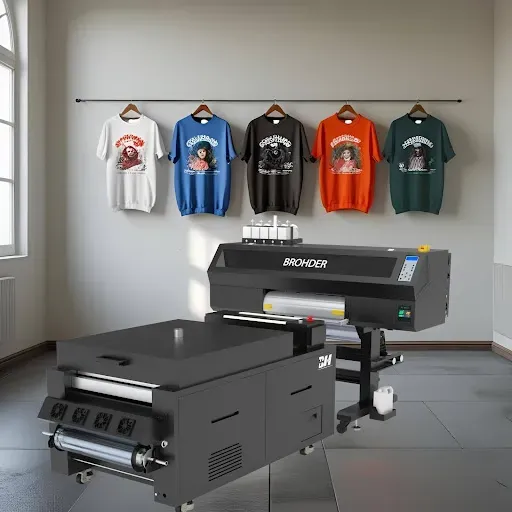
DTF printing trends 2026 are reshaping how brands approach on-demand apparel and custom merchandise, driving faster turnarounds and more reliable results. As the direct-to-film workflow matures, shops and designers watch for DTF technology advancements that improve color fidelity and substrate versatility. The 2026 printing industry trends emphasize direct-to-film printing with DTF ink compatibility improvements that deliver stable whites and vibrant colors across a wide range of fabrics. Automation and sustainability are key pillars, helping shops scale while reducing downtime and waste. The DTF vs DTG comparison remains a critical factor for brands evaluating where to invest and how to balance speed with color performance.
Viewed through different lenses, the same topic can be described as film-transfer printing or direct-film-based decoration, highlighting the technology's on-demand appeal. In this framing, the emphasis shifts to substrate compatibility, release layers, and automation that streamline design-to-production workflows. Other terms like ink-based film transfer, white-base technology, and eco-friendly curing echo the same trends toward reliability and sustainability. As retailers explore micro-batch runs and personalization, the value proposition remains the same: fast, durable, high-fidelity prints across diverse fabrics. Overall, the shift signals an expanding ecosystem where suppliers, printers, and brands collaborate to optimize processes and meet growing demand for customized merchandise.
DTF printing trends 2026: Driving on-demand apparel and brand customization
DTF printing trends 2026 are reshaping how brands approach on-demand apparel and custom merchandise. As the direct-to-film workflow matures, shop owners, print shops, and product designers are watching for faster turnarounds, stronger color fidelity, and more reliable results across a wider range of substrates. This aligns with 2026 printing industry trends that prioritize efficiency, scalability, and durable prints without sacrificing quality. In this landscape, direct-to-film printing serves as a core capability, enabling micro-mass production and seamless e-commerce integration while maintaining margins and customization options.
As you evaluate the latest DTF technology advancements, inks, and films, the focus remains on balancing speed with reliability. With improved DTF ink compatibility and more robust color control, designers can approach Pantone-like precision on fabrics from cotton blends to polyesters, ensuring consistency across lots. The ongoing push toward automation and smarter workflows helps shops scale production while preserving the visual integrity that customers expect from branded merchandise.
Ink compatibility and color management in DTF technology advancements
A core pillar of DTF technology advancements is ink compatibility. Modern formulations reduce nozzle clogging, improve white ink stability, and broaden the usable color gamut across synthetic and natural fabrics. This progress enables more dependable color reproduction and fewer reprints, which directly impacts margins and turnaround times in 2026. By aligning ink chemistry with advanced ICC profiles and streamlined RIP software, studios can achieve repeatable results across diverse substrates.
Effective color management in direct-to-film printing means standardized color libraries, accurate proofs, and predictable results from batch to batch. As printers adopt improved ink formulations and calibration techniques, brands can expect tighter color control on dark and light fabrics alike. These capabilities are essential for maintaining consistency in an increasingly competitive market and are a key element of the broader discussion around DTF ink compatibility and the ongoing evolution of direct-to-film workflows.
Film, adhesive, and powder innovations shaping DTF workflow
Release film quality and adhesive performance are foundational to durable DTF prints. Innovations in film coatings are reducing transfer temperatures, minimizing powder residue, and easing clean-up, which translates into less waste and faster production cycles. Improved adhesive formulations expand substrate versatility, enabling reliable performance on a broader mix of fabrics and blends without sacrificing washfastness.
The powder system and curing process also continue to mature, with more uniform coverage and efficient curing technologies that enhance image crispness and durability on folds and textured surfaces. Advances in curing lamps and temperature control help lower energy use while preserving print integrity, an important consideration for shops pursuing sustainability goals while maintaining throughput.
Automation and end-to-end workflows for DTF printing trends
Automation is increasingly a baseline expectation for commercial DTF operations. Web-to-print integration, automatic color management, ink management dashboards, and streamlined garment counting minimize manual handling and shorten lead times. In 2026, end-to-end workflow solutions—from design through post-processing to shipping—enable shops to outperform those relying on manual, paper-based processes.
A well-integrated workflow also depends on robust data management and planning. Brands should partner with suppliers offering reliable file preparation, accurate color proofs, and seamless data transfer to the printer. Emphasizing automation supports faster turns, reduced waste, and clearer visibility into production status, all of which align with the broader 2026 printing industry trends.
DTF vs DTG: choosing the right method in 2026
DTF sits at an interesting nexus between DTG and traditional heat-transfer methods. In 2026, many print shops will leverage both approaches, selecting the best method for each job based on fabric type, order size, and time constraints. DTF generally offers easier setup for small batches, faster changeovers, and reliable performance on non-cotton materials, while DTG remains advantageous for certain fabric compositions and color palettes with ink chemistry nuances specific to direct-to-garment printing.
For brands evaluating equipment investments, a hybrid strategy that combines DTF for versatile, fast-turnaround pieces with DTG for higher-end textile projects can maximize flexibility and margins. Understanding the DTF vs DTG comparison helps shops optimize workflows, reduce risk, and align equipment choices with target markets and product lines within the evolving landscape of 2026 printing industry trends.
Expanding substrates and market opportunities with DTF printing trends 2026
The substrate versatility of DTF continues to drive market expansion beyond T-shirts to bags, hats, sneakers, and other textiles. In 2026, brands seek short-run customization, micro-mass production, and on-demand fulfillment, making the ability to quickly switch substrates a strong competitive advantage. The broad substrate compatibility also supports diversified product catalogs, enabling shops to test new categories with minimal upfront investment.
This expansion is closely tied to sustainability and supply-chain resilience. By pairing DTF with flexible sourcing and efficient curing, businesses can offer rapid, customized items with durable washes and vibrant colors. As 2026 printing industry trends evolve, the emphasis remains on scalable, responsible production that delivers consistent quality across an increasingly varied set of substrates while maintaining margins and customer satisfaction.
Frequently Asked Questions
What are the essential DTF printing trends 2026 shaping on-demand apparel and custom merchandise?
DTF printing trends 2026 emphasize improvements in ink compatibility, stronger release film and adhesives, smarter automation, broader substrate support, and sustainability, all driving faster turnarounds and higher color fidelity.
How is DTF ink compatibility evolving in 2026, and what should shops expect from DTF printing trends 2026?
New DTF ink formulations improve white ink stability, reduce nozzle clogging, and expand the color gamut across fabrics. Enhanced ICC profiles and RIP tools help maintain color accuracy and consistency, aligning with DTF printing trends 2026.
What DTF technology advancements are most impactful in 2026?
Key advancements include end-to-end workflow automation, web-to-print integration, improved curing and energy efficiency, and more robust films, powders, and adhesives, all boosting throughput and durability.
DTF printing trends 2026 vs DTG: how does DTF compare for small runs and on-demand?
DTF typically offers lower setup costs, faster changeovers, and broader substrate versatility for small runs and personalized items. DTG remains strong on certain fabrics, so many shops adopt a hybrid approach to balance cost, speed, and quality.
What role do film, adhesive, and powder technology play in DTF printing trends 2026?
Advances in release film coatings, adhesive formulations, and powder coverage enhance image clarity, wash durability, and substrate versatility, making these technologies central to DTF printing trends 2026.
What steps should brands take to align with 2026 printing industry trends for DTF adoption?
Implement an integrated design-to-production workflow, evaluate ink and supplier options, test across target fabrics, invest in color management, and emphasize automation and sustainability to capitalize on 2026 printing industry trends.
| Aspect | Key Points |
|---|---|
| Overview of 2026 trends | DTF is maturing as a core on-demand capability; emphasis on faster turnarounds, color fidelity, and durability across fabrics, enabling scalable customization. |
| Ink and color management improvements |
|
| Film and adhesive technology |
|
| Powder systems and curing |
|
| Automation and workflow optimization |
|
| Sustainability and safety |
|
| Market expansion and demand patterns |
|
| DTF vs traditional methods |
|
| Practical implications for printers and brands |
|
| Direct-to-film printing in practice: tips |
|
| Future outlook and integration |
|
Summary
DTF printing trends 2026 set the stage for a matured on-demand production landscape where speed, color fidelity, and durability meet scalable workflows. As brands and print shops expand into more product categories and embrace automation, the market can expect greater substrate breadth, smarter color management, and more sustainable practices without sacrificing quality or margins. This conclusion highlights the practical implications for choosing between DTF, DTG, and traditional heat-transfer methods, guiding investments in inks, films, powders, and workflow systems. By staying adaptable and testing new releases, shops can achieve faster turnarounds, improved wash durability, and scalable profitability while delivering consistent customer satisfaction in a competitive market.