
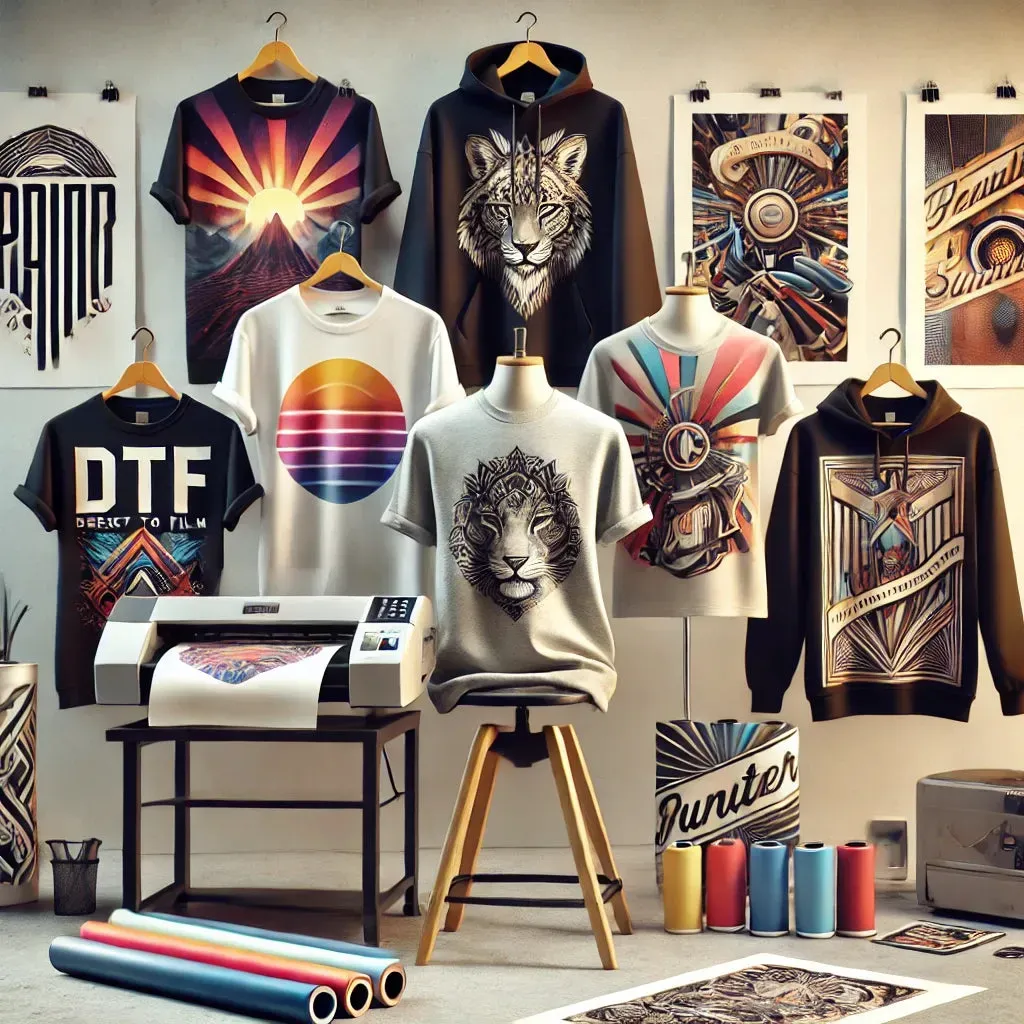
DTF design ideas are reshaping how brands and creators approach wearable art. With custom DTF printing, designers can translate bold graphics, typography, and intricate illustrations onto fabrics with vibrant color and durability, unlocking DTF transfer designs that perform in everyday wear. If you’re brainstorming new lines or refreshing your catalog, this guide covers a wide palette of DTF design ideas for apparel and beyond, including DTF designs for T-shirts and DTF printing on hoodies. You’ll learn practical design strategies, product-specific tips, and actionable steps to turn ideas into high-quality prints that resonate with customers and stand out in a crowded market. By combining color theory, typography, and texture with efficient production workflows, you can bring bold concepts to life across multiple garments.
Viewed through the lens of film-to-fabric technology, this topic centers on direct-to-film design practices that bring vivid graphics to garments. Alternative terms like film-based garment decoration, heat-applied artwork, and textile transfer concepts reflect the same core process. In practice, designers explore color fidelity, layering, and substrate compatibility to ensure prints look great on tees, hoodies, and accessories. Using LSIs, we connect related ideas such as color management, proofing, curing, and care instructions to broaden the scope of search relevance. By speaking in this diversified vocabulary, you help readers and search engines discover your DTF-focused content across closely related topics.
DTF Design Ideas for Apparel: Creative Strategies for T-Shirts and Hoodies
DTF design ideas for apparel open a wide creative runway, enabling bold typography, high-detail illustrations, and playful motifs to translate cleanly onto both light and dark fabrics. By pairing strong color strategies with deliberate layering, you can maximize impact on tees and hoodies alike, while maintaining production efficiency. This approach is especially powerful when combining typographic statements with minimalist negative-space art to create versatile graphics that work across product lines.
In practice, you’ll want to balance complexity with cost, ensuring that your DTF transfer designs remain legible from a distance and durable through washes. Emphasize color fidelity and texture by leveraging the high color gamut of DTF printing on hoodies and other garments, and keep file preparation tight with clear separations and safe margins. When you mix elements like retro vibes or nature-inspired motifs, you’ll create a cohesive library of DTF design ideas that can scale from T-shirts to accessories while staying on brand.
DTF Designs for T-Shirts: From Concept to Eye-Catching Graphics
DTF designs for T-shirts thrive on bold composition, legible typography, and scalable detail. Centerpiece graphics, typographic statements, and all-over prints can all translate into compelling apparel experiences, especially when you plan for color contrasts that perform on both white and dark fabrics. Crafting these designs with attention to print density and edge-to-edge placement helps ensure a strong visual presence across a range of shirt colors.
To bring these concepts to life, pair high-resolution imagery with precise color management and layered vector elements. This makes it easier to reproduce photorealistic art or graphic mashups with consistent results, whether you’re using standard tees or premium blends. The process benefits from considering DTF transfer designs early in the workflow, so proofs accurately reflect how the final print will look on actual garments.
Custom DTF Printing Essentials: File Prep, Color Management, and Proofing
Custom DTF printing begins long before ink meets fabric. Start with high-resolution art (preferably 300 dpi or higher) and vector logos to preserve sharpness when scaled. Working in CMYK and building clear color separations ensures predictable results, reducing surprises during the transfer stage and helping you maintain consistent branding across products.
A disciplined proofing process is essential. Create test proofs on representative fabrics and garment colors, then evaluate color accuracy, texture, and durability under heat and washing conditions. This is where your DTF transfer designs really get validated, allowing you to refine color libraries and layer orders so every future run meets your quality standards.
DTF Printing on Hoodies: Techniques for Dense, Durable Graphics
Hoodies offer generous surfaces for expressive DTF printing on hoodies, back panels, sleeves, and color-blocked sections. Large-scale prints benefit from careful planning of color contrast, layer stacking, and edge treatment to maximize visibility on darker fabrics. Sleeve art and back graphics can create dynamic storytelling while maintaining wearer comfort and fabric integrity.
Texture and depth can be achieved without extra embellishments by using shading, bevel-inspired effects, and strategic negative space. When paired with robust curing and proper fabric selection, DTF printing on hoodies yields durable results that resist cracking and fading. This makes hoodies an excellent canvas for premium, statement graphics that align with your brand’s story.
DTF Transfer Designs: Placement, Scale, and Readability Across Garments
DTF transfer designs demand thoughtful placement and scalable art to maintain readability across sizes and garment types. Consider center-chest logos for tees, back graphics for hoodies, and sleeve accents for added texture without overwhelming the fabric. Strategic color blocking and edge-to-edge layouts can guide the viewer’s eye and reinforce brand identity.
As you refine placement, test different scales to identify what resonates with your audience. Negative space and simplified shapes often translate more reliably across multiple SKUs, helping you preserve legibility on darker fabrics and in varying lighting conditions. Careful color management and proofing also reduce the risk of misalignment or color drift during production.
From Mood Board to Market: A Practical Workflow for DTF Design Ideas
DTF design ideas begin with mood boards that capture color palettes, typography, and imagery aligned with your brand voice. This iterative exploration fuels a pipeline of concepts that can be quickly translated into print-ready files for T-shirts, hoodies, and accessories. A structured ideation phase helps you generate a steady stream of ideas that stay cohesively on-brand.
A practical workflow moves from sketching to digital render, then to proofing and production. Start with rough concepts, refine 2–3 strongest options per theme, and build high-resolution digital files with organized layers for easy adjustment. Clear communication with suppliers and timely proofs ensure that the final product reflects your design intent, making it easier to market and scale your DTF design ideas across channels.
Frequently Asked Questions
What are the top DTF design ideas for apparel that maximize color fidelity across T-shirts and hoodies?
Key DTF design ideas for apparel include typography-forward statements, minimalist negative-space art, retro vibes, nature and geometric motifs, and subtle 3D textures. These concepts translate well across T-shirts, hoodies, and accessories when you plan color strategies that remain legible on light and dark fabrics. For DTF printing on hoodies, emphasize bold typography or large back graphics to maximize impact and test color accuracy on representative hoodie colors before production. Use a small color library to maintain consistency across batches.
How can I tailor DTF transfer designs for T-shirts and hoodies to optimize placement and readability?
Start with planned placements such as center chest, back, or sleeve, and use high-contrast colors to ensure readability on all garment colors. Design with scalable elements so a single artwork can adapt from T-shirts to hoodies without losing impact. Confirm licensing for any pop culture imagery before using DTF transfer designs.
What steps are involved in custom DTF printing to ensure print-ready files and consistent results?
Steps for custom DTF printing to ensure print-ready files and consistent results: start with high-resolution artwork (300 dpi) or vector sources for logos; work in CMYK and convert to the printer profile; create clear layers and color separations; allow safe margins away from seams; proof with a small batch on representative fabrics; finalize production files and confirm curing guidelines.
Which DTF designs for T-shirts tend to perform best for quick product-market fit and social sharing?
DTF designs for T-shirts that perform well focus on legible typography, high-contrast color palettes, scalable graphics, and a clear narrative or slogan. Limit color counts to reduce print time and cost while maintaining impact; opt for bold shapes and strong composition that read at a distance for social sharing. Use A/B testing with limited runs to identify which variations drive engagement and purchases.
What are best practices for preparing artwork for DTF printing on hoodies and other apparel?
Best practices for preparing artwork for DTF printing on hoodies and other apparel: ensure high-resolution artwork, prefer vector typography, manage color in CMYK, build separations with labeled layers, maintain safe margins, and run proofs on the target fabric color. Prepare base layers for dark fabrics to keep colors vibrant, and plan for curing and wash guidance to protect the print.
How can I balance creative risk and production cost when developing DTF design ideas for apparel?
Balancing creative risk and production cost when developing DTF design ideas for apparel involves matching design complexity to cost. Favor designs with a limited color palette, strong focal points, and scalable layouts that work across tees and hoodies. Use mood boards, scale experiments, and A/B tests to validate concepts before full runs, and reserve licensing for essential pieces.
| Aspect | Key Points |
|---|---|
| What is DTF printing? |
|
| Core design concepts to master |
|
| Design ideas by product | T-Shirts: centerpiece graphics, typographic statements, all-over/repeat patterns, photo-based designs. Hoodies: large back prints, sleeve art, cozy textures, color-blocked panels. Accessories: tote graphics, caps/beanies, small items with detailed art. |
| Artwork preparation |
|
| Printing & finishing considerations |
|
| Creative growth & workflow |
|
| Practical tips for success |
|
| Implementation roadmap |
|
| Why DTF design ideas are competitive |
|
| Common pitfalls to avoid |
|
| Real-world inspiration |
|
Summary
DTF design ideas offer a broad canvas for creativity, with practical advantages in color fidelity, fabric compatibility, and production efficiency. By grounding your concepts in typography, minimalism, retro vibes, and nature-inspired motifs—while tailoring designs to T-Shirts, Hoodies, and Accessories—you can build a compelling line that resonates with customers and stands out online. Remember to prep high-quality, print-ready files, test proofs on representative fabrics, and iterate your designs based on feedback and market trends. With a thoughtful approach to DTF design ideas, your next collection can be both visually striking and commercially successful.