
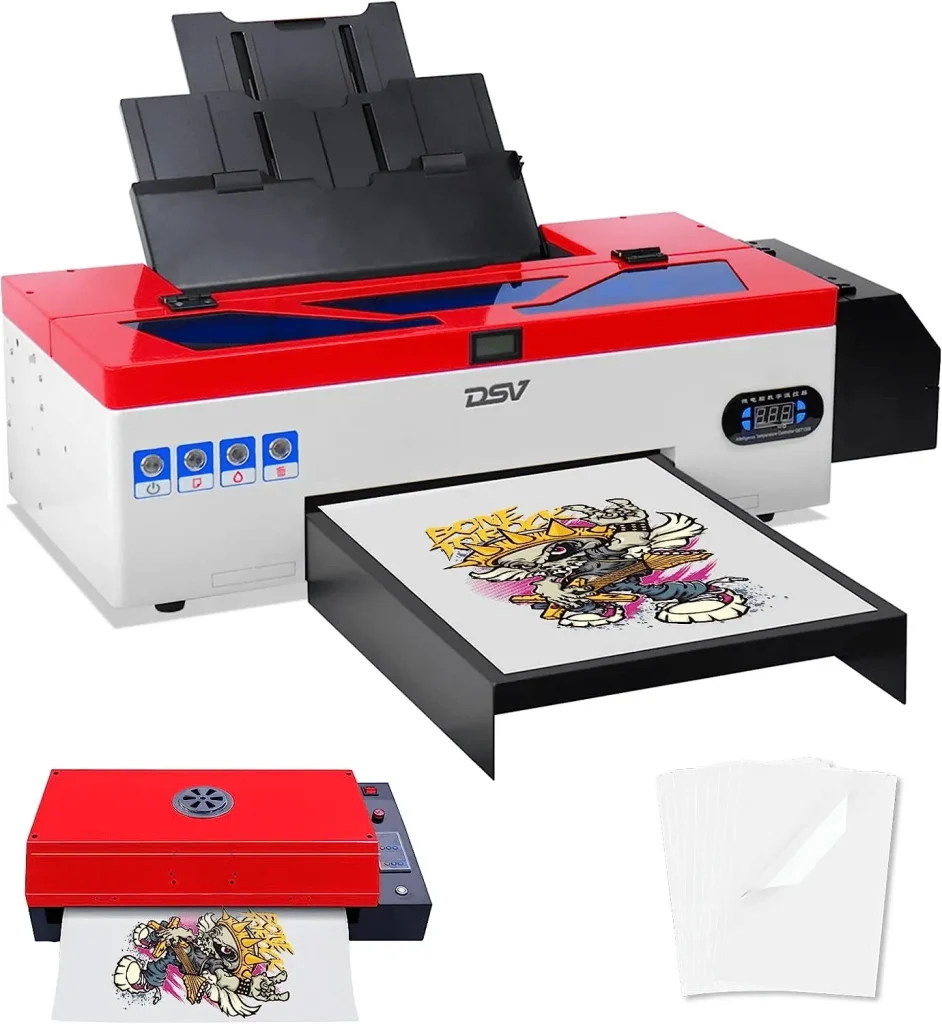
Best DTF printers 2026 are redefining small-business production with reliable color, solid uptime, and a lower total cost of ownership. This guide helps you navigate the features, model varieties, and real-world criteria for selecting a printer that fits your workflow. As brands expand into the market, finding a machine that consistently delivers vibrant designs and predictable maintenance becomes essential. To support your search, we weave in terms like DTF printer reviews 2026, DTF printers comparisons, direct-to-film printer 2026, DTF printer buying guide, and best budget DTF printer. Whether you’re upgrading from consumer gear or launching a new line, understanding what to look for in a DTF system saves time, money, and frustration.
Beyond the exact model names, the 2026 landscape centers on film-based textile printing, pigment inks, and a scalable workflow for on-demand apparel. Alternative terms like direct-to-film transfer technology, pigment-driven garment printers, and heat-transfer readiness describe the same trend shaping studios from home shops to contract manufacturers. Readers often think in terms of color fidelity, maintenance simplicity, and total cost of ownership rather than branding alone, which is precisely what an LSI approach helps reveal. Exploring adjacent topics such as media compatibility, curing options, automation potential, and RIP software compatibility can illuminate options that match your production profile.
Best DTF printers 2026: Key features that define top performers
In 2026, the market for direct-to-film printing has matured, and top performers distinguish themselves through a precise combination of image quality, versatility, and reliability. Look for printers that deliver crisp gradients, consistent white-ink performance, and robust color management that can reproduce branding with minimal banding. A strong model will also offer stable bed or roller handling, minimal head clogging, and straightforward maintenance routines that keep downtime to a minimum.
Beyond the print itself, the best DTF printers 2026 emphasize total-cost-of-ownership factors such as ink efficiency, film compatibility, and durable components. When evaluating options, consider how easily the machine integrates with your RIP software, how simple it is to source spare parts, and the quality of vendor support. In the context of DTF printer reviews 2026, these traits consistently correlate with longer uptime and more predictable print runs across diverse fabrics.
DTF printer buying guide: understanding entry-level to industrial-grade setups
A practical buying guide for 2026 starts with recognizing where your operation sits on the spectrum from entry-level to industrial-grade. Entry-level machines often lure with a low upfront price and compact footprints but may demand more hands-on maintenance and higher per-print costs. Mid-range models typically balance speed, media width, and automation, while professional options prioritize uptime, high volume throughput, and advanced maintenance features that suit contract work.
Framing your decision around a DTF printer buying guide helps you map use cases to capabilities. Focus on core needs such as print width, color gamut, white-ink reliability, and film compatibility, then pair these with expected monthly volumes and maintenance tolerance. This structured approach minimizes surprises and aligns your choice with long-term profitability rather than just the sticker price.
DTF printer reviews 2026: what real-world testing reveals about performance
DTF printer reviews 2026 consistently highlight how color accuracy and ease of maintenance shape the practical experience of owning a printer. Real-world testing often reveals differences in how quickly a device stabilizes color, how well it handles grayscale, and how predictable the adhesion and wash-fastness are across cotton, blends, and synthetics.
Reviews also underscore the value of reliable diagnostics and accessible support. A printer that offers clear maintenance routines, serviceable components, and responsive customer service tends to deliver less downtime and lower headaches for new users. When you read DTF printer reviews 2026, look for consistent sample prints, documented head-life expectations, and transparent consumable costs to gauge long-term performance.
DTF printers comparisons: balancing price, performance, and consumables
DTF printers comparisons help buyers weigh upfront costs against ongoing expenses like ink usage, film, and replacement parts. Effective comparisons consider not just the advertised speed, but the impact of color fidelity on run-length and the cost per print when accounting for white-ink usage and multi-pass processes.
In practical terms, a solid comparison evaluates media handling, reliability under batch conditions, and the availability of third-party consumables. By anchoring decisions to a structured framework—such as a scoring rubric for print quality, maintenance ease, and total cost per month—you can move beyond anecdotal impressions and select a model that aligns with your business goals.
Direct-to-film printer 2026: film, inks, and durability across fabrics
Direct-to-film printer 2026 models continue to improve in film handling, ink chemistry, and curing workflows. Look for compatibility with multiple PET films, reliable adhesive powders, and stable white-ink deposition that maintains opacity on dark fabrics. Efficient curing and proper heat management also contribute to longer print life and better wash-fastness across cotton, blends, and synthetics.
Durability across fabrics hinges on consistent bonding, proper pretreatment choices, and robust software controls that prevent color shifts during heat transfer. As you evaluate a direct-to-film printer 2026 option, consider how easily the system integrates with your chosen films, whether it supports scalable batch work, and if it offers straightforward maintenance routines that keep production moving smoothly.
Best budget DTF printer: maximizing ROI without compromising essential quality
For many small shops and startups, the best budget DTF printer delivers a compelling balance of initial affordability and workable performance. These machines typically emphasize straightforward operation, compact footprints, and acceptable print quality for short runs or prototyping. While costs per print might be higher than premium tiers, smart choices in consumables and maintenance can keep margins healthy.
To maximize ROI in the budget category, look for reliable service networks, availability of spare parts, and a community or vendor offering affordable training. Pair this with a careful assessment of ink and film costs and a practical 6–12 month plan to evaluate head life and waste. By applying the DTF printer buying guide principles to budget models, you can achieve durable results without overextending capital.
Frequently Asked Questions
What makes the Best DTF printers 2026 stand out in terms of image quality and total cost of ownership?
For the Best DTF printers 2026, evaluate image quality, versatility across fabrics, efficiency, and durability. Also assess total cost of ownership, including ink, film, and maintenance, to ensure reliable uptime and consistent colors.
How can I use the DTF printer buying guide and DTF printer reviews 2026 to pick the right model?
Start with the DTF printer buying guide to define needs (print width, volume) and then consult DTF printer reviews 2026 to gauge real-world reliability, service, and consumables. Use these sources to compare total cost of ownership and ongoing expenses.
For a startup, what should I consider about the direct-to-film printer 2026 options and budgeting a best budget DTF printer?
For direct-to-film printer 2026 budgeting, consider entry-level vs. mid-range options: entry-level keep upfront low but may have higher per-print costs; best budget DTF printer can fit tight budgets if consumables and head life are reasonable. Also weigh film costs, ink prices, and potential automation needs.
What insights do DTF printers comparisons provide about throughput, ink use, and film compatibility in 2026?
DTF printers comparisons typically cover print quality, throughput, media width, and maintenance. In 2026, verify color fidelity and white-ink performance, plus the availability of spare parts and ink/film costs.
What maintenance and reliability factors matter in the Best DTF printers 2026?
Maintenance and reliability: choose models with easy head cleaning, diagnostics, and accessible service points. A strong vendor and community support improves longevity and aligns with the Best DTF printers 2026 standard.
How important are workflow integration and automation in the direct-to-film printer 2026 landscape?
Direct-to-film printer 2026 buyers should assess workflow integration: software compatibility, RIP support, curing options, and automation. Automation-focused solutions offer throughput gains but require higher upfront investment.
| Key Point | Description |
|---|---|
| DTF market in 2026 | DTF printing has moved from niche to mainstream for small businesses, designers, and POD shops; emphasis on reliable printers, consistent color, and reasonable total cost of ownership. |
| Guide focus | This guide examines Best DTF printers 2026, important features, model types, and a practical buying framework based on real-world criteria. |
| Who it’s for | Ideal for upgrading from consumer-grade inkjets, starting a new apparel line, or expanding an existing DTF-oriented business. |
| Market trends | Color accuracy improvements, easier maintenance, and longer-lasting prints; options range from home studios to high-volume production; common priorities include print quality, ink cost, film compatibility, ease of use, and uptime. |
| Evaluation approach | Define needs, evaluate total cost of ownership, and validate with independent reviews; combine buying guidance with a structured assessment framework. |
| DTF printing basics | Printers feed pigment inks on special film to produce designs that transfer to fabrics; top models emphasize image quality, versatility, efficiency, and durability; handle cotton to polyester with consistent adhesion, wash-fastness, reliable maintenance, software compatibility, and scalable workflows. |
| Tiered market landscape | Entry-level to industrial-grade options; budget focuses on low upfront cost and simple operation; mid-range offers faster speeds and better automation; professional/industrial emphasizes maximum uptime and high-volume capacity; consider ongoing consumables costs. |
| Core features to evaluate | Print quality and color fidelity; Ink and film compatibility; Media handling and build quality; Maintenance and reliability; Operational costs; Throughput and workflow integration. |
| Choosing between options | Depends on volume, substrate variety, and whether color accuracy or speed is prioritized; consider daily output, fabrics, maintenance tolerance, and consumable availability. |
| Practical evaluation framework | List top use cases, map to core requirements, score 1–5, and translate impressions into apples-to-apples comparisons; consider vendor support and community. |
| Representative options (2026) | Profiles include entry-level, mid-range, professional-grade, and automation-focused archetypes; these are illustrative, not endorsements, reflecting current market dynamics. |
| Getting started | For beginners, start with entry-level or mid-range gear to build proficiency and workflow; plan for growth with more capable options as needed. |
Summary
Best DTF printers 2026 describe a marketplace where performance, value, and resilience come together to support a wide range of business sizes. By centering on print quality, film compatibility, maintenance accessibility, and total cost of ownership, buyers can navigate DTF printer reviews 2026 with greater confidence. Whether starting small with entry-level gear or pursuing high-volume production with automation, the right printer aligns with your use cases, fabrics, and market demand. A structured process—define use cases, estimate TCO, validate with independent reviews, and run a practical trial—will help you select a model that scales alongside your business.