
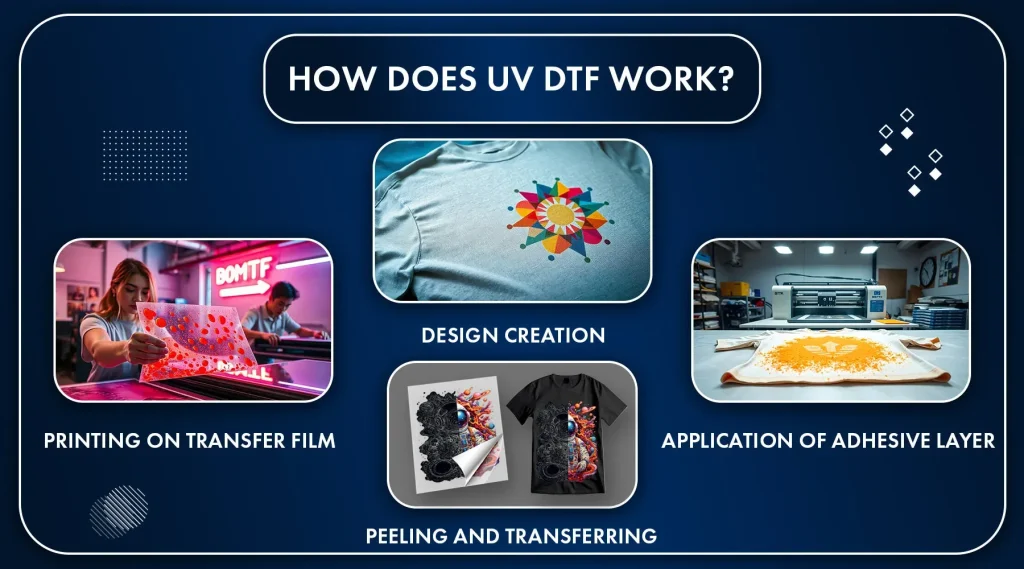
UV DTF transfer is redefining how brands decorate fabrics and other substrates with vivid, durable graphics. By blending UV-curable inks with a direct-to-film workflow, this method delivers brighter colors, faster curing, and expanded substrate compatibility. As demand for on-demand production grows, UV DTF transfer enables quicker turnarounds for apparel, promotional items, and home textiles. Understanding the DTF technology behind this process helps explain why the combination of curing speed and adhesion quality matters for large and small runs. From design studios to manufacturing floors, the trend toward flexible, high-impact prints is accelerating as printers add robust color management and streamlined workflows.
To frame the conversation with broader context, consider this technology as digital textile decoration that blends ink chemistry with substrate versatility. When shops talk about rapid customization, they mean print-on-demand capabilities that adapt to short-run campaigns and evolving brand visuals. The same workflow supports coatings, blends, and even non-traditional materials, expanding the potential product mix beyond standard fabrics. In plain terms, this is a form of fast, color-rich transfer that relies on digital design, precise color management, and streamlined production steps. Brands benefit from predictable results, fewer reprints, and the ability to test ideas quickly before committing to large stock. As supply chains lean toward local production, the ability to produce on-site or near-market becomes a competitive differentiator. This framing also helps retailers align product development with sustainable goals, since digital-to-fabric workflows minimize waste and inventory risks. In practice, teams should map substrate mixes, design libraries, and QC checks to ensure consistent outcomes across campaigns.
Frequently Asked Questions
What is UV DTF transfer and how does it fit into the DTF transfer process?
UV DTF transfer is a variation of the DTF transfer process that uses UV-curable inks. In this workflow, the design is printed on a film, a powder is applied, and UV curing accelerates drying before pressing onto fabric, enabling faster production and broader substrate compatibility.
How does UV printing impact the brightness and durability of UV DTF transfer on fabrics?
UV printing with UV-curable inks in UV DTF transfer yields brighter colors and improved color fidelity, including strong white underbase performance on dark fabrics, along with enhanced wash durability for many textiles.
What are the top UV DTF transfer trends to watch in 2026?
Key trends include advances in UV printing technology (higher resolutions, wider color gamuts), eco-friendly inks with lower VOCs, expanded substrate compatibility, on-demand and mass customization, automation and color management, and improvements in durability and wash-fastness, as highlighted in UV DTF transfer trends 2026.
Which substrates are compatible with UV DTF transfer, and how does this compare to traditional methods?
UV DTF transfer expands substrate compatibility beyond traditional fabrics to cotton blends, leather, performance wear, and select non-wovens, enabled by UV-curable inks and rapid curing. This makes UV DTF transfer a flexible alternative to traditional DTF technology for many textile printing applications.
What steps should a business take to implement UV DTF transfer for on-demand production?
To implement UV DTF transfer, start with a printer that offers UV LED curing and UV-curable DTF inks, test substrate prep and pretreatments, invest in color management and ICC profiles, streamline the workflow with RIP software and automation, and run pilots to measure ROI and establish QC for adhesion and durability.
How does UV DTF transfer compare with sublimation, and when should you choose one?
UV DTF transfer offers broader substrate versatility and strong white underbase on dark fabrics with faster curing, while sublimation delivers vibrant color on polyester. Choose UV DTF transfer for cotton blends and mixed fabrics or on-demand needs, and choose sublimation for pure polyester applications.
| Topic | Key Points |
|---|---|
| What is UV DTF Transfer? |
|
| Why UV DTF Matters in 2026 and Beyond |
|
| Key Trends to Watch (2026 and Beyond) |
|
| DTF Transfer Process: Evolution and Implications |
|
| Practical Guidelines for Implementing UV DTF Transfer |
|
| UV DTF vs Sublimation: When to Choose Which |
|
| Market Opportunities and Industry Adoption |
|
| Quality, Color, and Consistency: Core to Future UV DTF Success |
|
| Sustainability and the Urban-Industrial Workflow |
|
Summary
Conclusion: UV DTF transfer is shaping the future of textile decoration by delivering vibrant, durable prints quickly across a broad range of fabrics. As brands pursue on-demand, personalized products, UV DTF transfer enables scalable production with consistent color and strong durability across diverse substrates. Embracing automation, robust color management, and workflow optimization will help businesses maximize throughput and profitability, while sustainability considerations guide ink development, material choices, and energy use.