
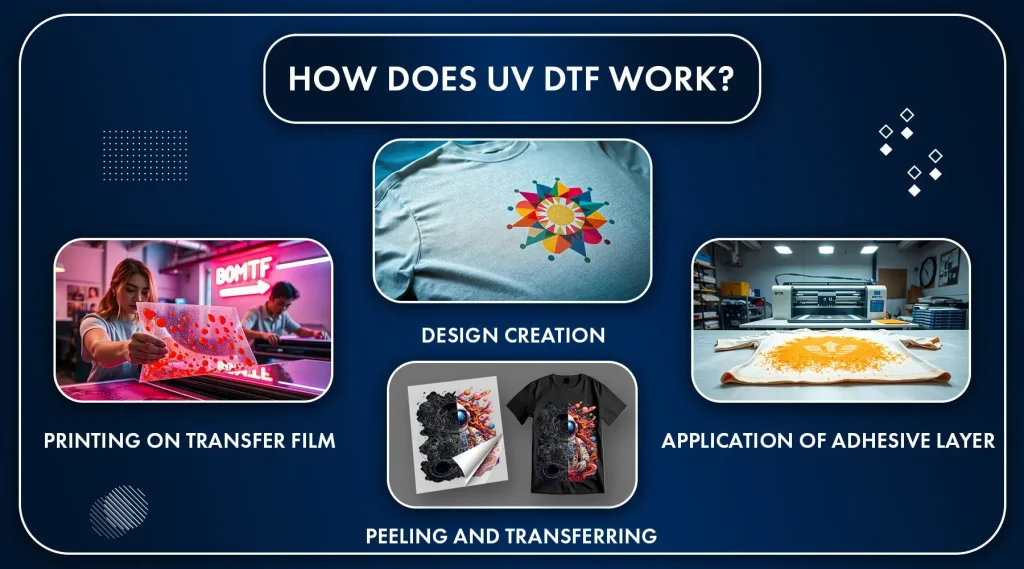
UV DTF transfer is redefining fabric printing by delivering bold, durable graphics with crisp detail. In the ongoing comparison of DTF vs sublimation, this method offers strong color on a wider range of fabrics. It is described as a versatile option that can print on cotton-rich blends while fitting into varied fabrics printing methods. Its durability depends on adhesive quality and press parameters, making testing essential to understand how the process holds up. For designers seeking color fidelity across dark and light fabrics, this approach can deliver solid color, vibrant contrast, and reliable color accuracy in fabric prints.
Beyond the official name, the technique is often described as a UV-curable film transfer or a direct-to-film process that uses UV inks on textiles, including UV DTF transfer on fabrics. From an LSI perspective, related terms like print-on-film, UV-ink transfer, and UV-curable coatings help connect this method to the broader world of fabrics printing methods. The concept also links with DTF vs sublimation discussions, highlighting substrate compatibility and color behavior across different fabrics. By framing the topic through related ideas such as durability, color fidelity, and ease of integration into existing workflows, you create a richer SEO-friendly overview.
DTF vs Sublimation: A Quick Comparison for Fabrics Printing Methods
DTF vs sublimation presents two distinct pathways in fabrics printing methods, each with its own workflow, substrate compatibility, and end-use results. UV DTF transfer leverages a transfer film, adhesive, and UV-curable inks to embed the design on a wide range of fabrics, including cotton-rich blends. Sublimation relies on dye migration into polyester fibers for a soft hand and bright color, especially on white or light polyester substrates. Understanding how these methods differ helps brands tailor print strategies for banners, apparel, or accessories.
Choosing between UV DTF transfer and sublimation hinges on fabric type, color requirements, and production goals. For dark fabrics or cotton-rich blends, UV DTF with a white underbase can deliver strong opacity and vibrant, durable results. For high-volume polyester items where color vibrancy and a soft hand are paramount, sublimation often delivers the most efficient, scalable solution. This decision framework aligns with the broader concept of fabrics printing methods and how different technologies meet different product needs.
UV DTF Transfer on Fabrics: Strengths on Cotton-Rich Blends
UV DTF transfer on fabrics excels on cotton-rich blends, offering solid opacity on dark backgrounds and vibrant color reproduction. The white underbase capability helps achieve full-color prints with good coverage, which is crucial for designs with deep blacks or saturated hues. This method is flexible enough to handle T-shirts, hoodies, tote bags, and athletic fabrics while maintaining a crisp, bold appearance.
The tactile feel of UV DTF can be slightly raised due to the transfer film layer, though post-press finishing and careful calibration can minimize this hand. When properly bonded, the durability of UV DTF transfer remains competitive on cotton-rich textiles, provided you follow precise heat-press parameters and garment care guidelines. This approach aligns with the idea of UV DTF transfer on fabrics as a versatile option for diverse substrate choices.
Sublimation on Polyester: Color, Texture, and Substrate Compatibility
Sublimation shines on polyester and polymer-coated substrates, delivering exceptional color vibrancy and a silky, seamless hand. The dye becomes part of the fabric, producing bright, long-lasting results on 100% polyester and high-poly content blends. Substrates such as coated hard surfaces, mugs, and tiles also respond well to sublimation, expanding the range of printable products beyond textiles.
However, sublimation requires light-colored or white polyester bases and compatible polymer substrates to maximize color accuracy. Dark fabrics or natural fibers like cotton are not ideal for sublimation without additional pre-treatments, which adds steps and cost. This fundamental constraint shapes how teams plan production and aligns with the broader context of fabrics printing methods and substrate strategy.
Durability of UV DTF Transfer: What Impacts Longevity
Durability of UV DTF transfer depends on the adhesive strength, the quality of the transfer film, and the heat-press parameters used during bonding. When the bond is solid and the press is calibrated for the fabric, UV DTF prints can withstand regular washing and wear. Yet aggressive wash cycles, harsh detergents, or improper curing can introduce edge wear or slight fading over time.
To maximize longevity, it’s essential to follow garment care guidelines and perform wash tests on the actual fabric composition being printed. This focus on durability—often referenced as the durability of UV DTF transfer—helps brands set realistic expectations with clients and refine processes for different fabric blends. Proper post-press finishing and testing support consistent results across batches.
Color Accuracy in Fabric Prints: Managing Profiles Across Methods
Color accuracy in fabric prints is influenced by substrate color, base fabric, and the chosen printing method. Sublimation offers exceptional color fidelity on white or light polyester, delivering saturated hues and clean gradients due to direct dye integration into fibers. When printing on darker fabrics, sublimation typically requires a base layer or pre-treatments that can complicate workflow but can still yield impressive color outcomes.
UV DTF transfer provides robust color reproduction across a broader range of fabrics, including darker tones, thanks to the white underbase and adhesive system. While the color gamut may be slightly more limited on ultra-bright dye-like colors compared to white-poly sublimation, UV DTF on cotton-rich fabrics can produce vivid, stable hues with tactile texture. Effective color management—printer calibration, color profiles, and real-world lighting simulations—helps ensure consistent color accuracy in fabric prints.
Workflow, Costs, and Hybrid Strategies for Small-to-Mid Volume Shops
For shops focusing on small-to-mid volume runs, the workflow costs of UV DTF transfer—transfer films, adhesives, and UV-curable inks—can be higher upfront but offer flexibility across diverse fabrics. Sublimation, by contrast, can be highly automated and cost-effective for large polyester-centric runs, thanks to efficient setup and fast production.
A hybrid approach is common in practice: use UV DTF for cotton-rich fabrics and blends that demand opacity and strong color on dark backgrounds, and reserve sublimation for polyester-heavy products to maximize color vibrancy and fabric feel. This strategy broadens product catalogs while optimizing the strengths of each method, aligning with the realities of production planning and the need to balance cost, durability, and turnaround.
Frequently Asked Questions
DTF vs sublimation: How does UV DTF transfer compare when printing on fabrics?
UV DTF transfer delivers vibrant color with an opacity-friendly white underbase, making it effective on dark fabrics. Sublimation, by contrast, excels on polyester and polymer-coated substrates with a soft hand. The best choice depends on fabric type, desired color strength, and your production workflow.
What is UV DTF transfer on fabrics best suited for among fabrics printing methods?
UV DTF transfer on fabrics is highly versatile and works well on cotton-rich blends and poly blends, offering solid opacity on dark backgrounds. It fits well for small-to-mid volume runs and diverse substrates. For 100% polyester or coated hard surfaces, sublimation may deliver brighter results.
What factors influence the durability of UV DTF transfer on fabrics?
Durability of UV DTF transfer depends on adhesive strength, transfer film quality, and heat-press parameters. When bonded correctly and tested on actual fabrics, it can withstand regular washing, though aggressive cycles may cause edge wear or fading. Always follow care guidelines and perform wash tests.
How can color accuracy in fabric prints be optimized with UV DTF transfer on fabrics?
Color accuracy in fabric prints with UV DTF transfer is enhanced by using a white underbase on dark fabrics and by calibrating with color profiles. Test on the target substrate under real lighting, and manage expectations since the color range may differ from sublimation on white poly.
Which fabrics are best suited for UV DTF transfer on fabrics, and when should you consider sublimation?
UV DTF transfer is well-suited for cotton-rich blends and dark fabrics, while sublimation is preferred for 100% polyester and polymer-coated items. Consider fabric content, color requirements, and durability needs when choosing between these fabrics printing methods.
What production steps help optimize color vibrancy and durability when using UV DTF transfer?
To optimize color vibrancy and durability, test on the actual fabric, fine-tune heat-press time/temperature/pressure, and consider post-press finishing. Conduct color matching experiments with color profiles and provide clear care instructions to customers.
| Aspect | UV DTF transfer | Sublimation |
|---|---|---|
| How it works | UV-curable inks on transfer film (often with a white underbase), adhesive layer, heat-press, then peel the film to leave the design embedded in the fabric. | Print on transfer paper with disperse dyes, heat and pressure to transfer dye into polyester fibers or polymer-coated substrates; dye becomes part of the fabric. |
| Best fabrics | Cotton-rich blends and diverse fabrics; strong opacity on dark backgrounds. | 100% polyester or high-poly content items; polymer-coated surfaces. |
| Color & opacity | Excellent on dark fabrics due to white underbase; strong vibrancy on blends. | Ultra-bright colors on white/light polyester; color depends on base fabric. |
| Feel (hand) | May have a slightly raised feel from the film; post-press finishing can reduce this. | Soft hand; ink becomes part of the fabric. |
| Durability & wash | Good durability when bonded; edge wear possible with aggressive washing. | Excellent wash-fastness on polyester; dye-into-fiber durability when conditions are right. |
| Cost & workflow | Higher upfront (inks, film, adhesive); more steps; suitable for small-to-mid runs. | Lower per-unit cost for large runs; highly automated after setup. |
| Ideal use cases | Versatile for cotton-rich blends, dark fabrics, and diverse substrates. | High-volume polyester items, white/light fabrics, and polymer-coated surfaces. |
Summary
UV DTF transfer offers a flexible option in modern fabric printing, delivering strong color on dark textiles and compatibility with a wide range of substrates. When deciding between UV DTF transfer and sublimation, consider fabric type, color requirements, substrate, and production volume to select the best approach. UV DTF transfer excels on cotton-rich blends and dark fabrics with good opacity, while sublimation shines on polyester with vivid color and a soft hand. A hybrid approach—leveraging UV DTF for cotton blends and sublimation for polyester-heavy products—can broaden your catalog and optimize results. Careful testing, adhesion, and finishing are key to durable, vibrant outcomes for both methods.